
Operate a tracked dozer
A tracked dozer is one of the most powerful earthmoving machines on any construction or mining site — capable of moving massive volumes of soil, sand, rock and debris through the most demanding terrain. Train your operators to use it safely, professionally and legally — with this CETA-accredited Tracked Dozer Operator Training course from SACTS.
DESCRIPTION
Unit Standard (SAQA Reg. No 262729)
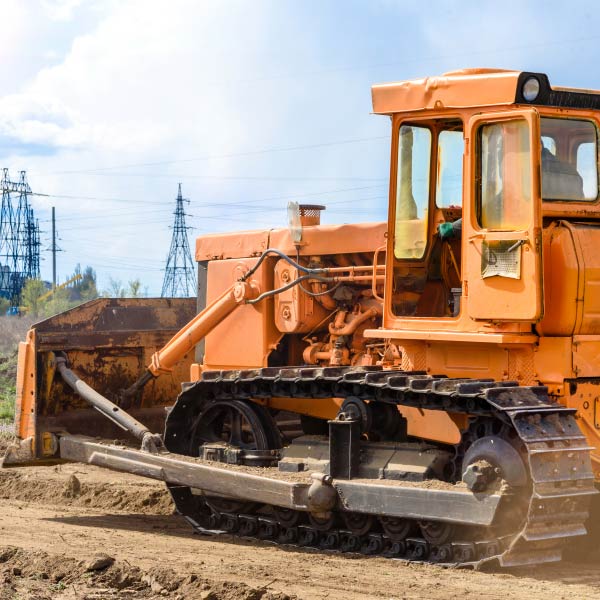
Tracked dozer operator training is an essential qualification for any construction plant operator required to operate a bulldozer on a construction, mining or civil engineering site in South Africa. A dozer — short for bulldozer — is a continuous tracked tractor with a substantial wide metal plate, known as a blade, mounted to the front of the tractor. Dozers are large and powerful tracked machinery and the tracks provide them with ground holding capability and mobility in all kinds of terrains.Furthermore, the torque divider is designed to transform the engine power in order to enhance the dragging capacity of the tracked dozer. Commonly, a dozer is used to move significant magnitude of soil, sand, debris and obstacles — and to clear roads and bushes. As a result, qualified tracked dozer operators are in high demand across South Africa’s construction, mining, road building and land clearing sectors.
Why Tracked Dozer Operator Training Matters
Operators who are not adequately trained in tracked dozer operations are at great risk of injury because of their lack of understanding in the principles of operations that allow tracked dozers to move sand, soil, debris and other material. Furthermore, the OHS Act and Construction Regulations require all construction plant operators to be trained and competent before operating any machine on site. As a result, investing in tracked dozer operator training protects your people, reduces your risk and keeps your business legally compliant.
Successful candidates credited with this unit standard are able to:
- Demonstrating knowledge of the functions of a tracked dozer.
- Planning for work activities and prepare work area.
- Starting and shutting down tracked dozer.
- Operating tracked dozer.
- Transporting tracked dozer to and from site.
COURSE DURATION:
- 5 Days Novice
- 1 Day Re-certification
NQF LEVEL: 2
CREDITS: 15
Quality Assured Partner: Construction Education And Training Authority
Description
The qualifying learner will be able to operate a tracked dozer by understanding the functions of starting, shutting down and operating procedures for the machine. Learners who master the applied competence described in this unit standard will contribute to the development of a professional community of Construction Plant operators. The area of focus of this course will be;
Knowledge of the Functions of a Tracked Dozer
Understanding the Tracked Dozer
A dozer — short for bulldozer — is a continuous tracked tractor with a substantial wide metal plate, known as a blade, mounted to the front of the tractor. Dozers are large and powerful tracked machinery and the tracks provide them with ground holding capability and mobility in all kinds of terrains. The torque divider is designed to transform the engine power in order to enhance the dragging capacity of the tracked dozer. This module consequently introduces learners to the key components, parts and functions of a tracked dozer — giving them the foundational knowledge required to operate the machine safely and professionally on any construction or mining site.
Parts and Components
Furthermore, learners will develop a thorough understanding of the tracked dozer’s key components — including the dozer blade types including straight blade, angle blade and U-blade, rippers and winches. In addition, learners will develop a thorough understanding of the tracks and track frame — including the track assembly, track chain, track shoes, track frame, track frame rollers, front idler, recoil spring and track adjusting mechanism. As a result, learners will be able to identify and describe the function of every major component before they begin operating the machine.
Controls, Instruments and Electronic Monitoring System
Furthermore, learners will be introduced to the controls and instruments overview, Electronic Monitoring System (EMS), basic EMS symbols and warning category levels — as well as temperature gauges, light switches, windshield wiper and washers, heating and air-conditioning controls, fan control and temperature control. Consequently, learners will understand the purpose and function of every control and instrument before the machine is started for the first time.
Planning for Work Activities and Preparing the Work Area
Pre-Operation Planning
Before any tracked dozer operation begins, a qualified operator must plan carefully and prepare the work area thoroughly. This module consequently equips learners with the skills to assess site conditions, identify hazards and develop a safe work plan — ensuring that all work is carried out safely, efficiently and in full compliance with the OHS Act and Construction Regulations.
Tracked Dozer Safety
Furthermore, learners will develop a comprehensive understanding of tracked dozer safety — including crushing and burn prevention, fire and explosion prevention, machine start-up safety, engine start-up and operating safety, machine operating safety, machine parking safety, transporting, loading and unloading, and machine towing safety. In addition, learners will learn about precautions for maintenance — including keeping the workplace clean and tidy, personnel safety, attachment safety and noise control.
Operating Procedures and Site Rules
Furthermore, learners will develop a working knowledge of operating procedures — including hooter signals, road signs, safety risk controls, accident reporting, breakdown procedures, direction of travel and precautions when travelling and operating a dozer. As a result of completing this module, learners will be able to coordinate effectively with other trades and contractors on site — ensuring that tracked dozer operations proceed safely and without risk to other workers, members of the public or surrounding infrastructure.
Precautions and Maintenance Requirements
In addition, learners will develop a working knowledge of specific maintenance precautions — including precautions when using a hammer, welding repairs, removing battery terminals, precautions with high-pressure oil, handling of high pressure hoses, waste material disposal, maintenance of air-conditioners, compressed air safety, periodic parts replacement and personal protective equipment requirements.
Starting and Shutting Down the Tracked Dozer
Pre-Start and Daily Inspections
A thorough pre-start inspection is the first line of defence against mechanical failure and operator injury. This module therefore equips learners with the knowledge and practical skills to conduct daily inspections — including pre-start checks, dozer level checks and access and exit procedures. Furthermore, learners will develop the ability to complete a pre-shift checklist, daily maintenance service card, logbooks and other checklists — ensuring that all pre-start documentation is complete before the machine is started.
Start-Up Procedures
In addition, learners will develop the practical skills to start the tracked dozer safely and in accordance with the manufacturer’s specifications — including starting with an external air supply, the cold engine idle procedure, engine starting with jumper cables, use of jumper cables, auxiliary start-up, after starting the engine, secondary brake testing, procedure for warming up the engine and extreme care when leaving the engine running. Furthermore, learners will develop the skills to conduct moving-off and operational checks before any dozing operations begin on site.
Safe Shutdown Procedures
This module also covers the correct shutdown and close-down procedures for the tracked dozer — including shutting down procedures and safety summary — ensuring that the machine is correctly documented and safely secured at the end of every work shift. As a result, learners will be able to hand over a safe, correctly parked and properly documented tracked dozer at the end of every shift.
Operating the Tracked Dozer
Principles of Operation and Mechanical Appreciation
This is the core knowledge and practical module of the course — covering the fundamental operating principles and mechanical systems that every professional tracked dozer operator must understand. Learners will consequently develop a thorough understanding of the machine’s key mechanical systems — including engine, transmission types including manual and automatic, differentials and final drives, undercarriage, steering system, hydraulic system including hydraulic reservoir, strainers and filters, hydraulic pumps, control valves, hydraulic cylinders and flexible hoses, fuel systems, electrical systems including storage battery, charging system and lighting system, braking system, and cooling system including air cooled, liquid cooling system, radiator and radiator pressure cap.
Hazard Awareness and Machine Monitoring
Furthermore, learners will develop a working knowledge of proximity of other machines, warning devices, oil pressure gauge, air pressure gauge, hydraulic pressure gauge, hydraulic temperature gauge, fuel level gauge, warning signals, warning operations and safety features. In addition, learners will develop the ability to identify and resolve common machine faults through practical troubleshooting techniques.
Practical Operating Techniques
Furthermore, learners will develop hands-on practical skills across a full range of tracked dozer operations — including attachment controls, blade control, blade tilt control, ripper control, parking brake, service brake, accelerator, engine shutdown, parking and secondary brake, accelerator pedal, transmission direction and speed control and transmission neutral lock. In addition, learners will develop practical skills across a wide range of machine operations — including clearing bush and trees, trees with large root systems, stumping, removing rocks and boulders, working in wet material, bulldozing, side by side dozing, slot dozing, spreading, backfilling, ditching, sidehill excavation, finishing side slopes and push dozer operations.
Dealing with Hazards and Difficult Ground Conditions
As a result of completing this module, learners will be able to identify and respond to all types of hazards on site — including stationary hazards, moving hazards, proximity hazards and ground hazards — using the system of vehicle control: identify, predict, decide and execute. Furthermore, learners will be able to adjust their operating technique to maintain safe and efficient tracked dozer operations in all ground and weather conditions.
Transporting the Tracked Dozer To and From Site
Safe Transportation Procedures
Transporting a tracked dozer to and from site carries its own unique set of risks — and consequently requires the same level of care and planning as the dozing operation itself. This module therefore equips learners with the knowledge and practical skills to prepare the machine for transportation — including lowering and securing the blade, completing all pre-transport checks and ensuring that the machine is safely configured for loading onto the transport vehicle.
Loading, Securing and Offloading
Furthermore, learners will develop the practical skills to safely load, secure and offload the tracked dozer — in compliance with the National Code of Practice (NCOP No 43835) requirements for transporting, loading and unloading the tracked dozer. In addition, learners will learn how to correctly position and secure the tracked dozer on the lowbed trailer — including correct tie-down procedures, load securing requirements and safety checks before departure.
Road Transport Requirements and Legal Compliance
Furthermore, learners will learn about the legal requirements governing the transportation of heavy construction plant on public roads in South Africa — including abnormal load permits, escort vehicle requirements, height and width restrictions and road traffic legislation. As a result, learners will understand their responsibilities as the operator of a heavy vehicle on public roads — including speed limits, overtaking restrictions and the correct response to vehicle breakdowns and emergencies on public roads.
Offloading and Site Positioning
Finally, this module covers the safe offloading of the tracked dozer from the transport vehicle and the correct positioning of the machine on site before dozing operations begin — including safe parking procedures, engine stopping procedures and correct procedures for leaving the machine — ensuring that the machine is safely and correctly set up for the work ahead without risk to the operator, other workers or the public.
.Entry level requirements into this programme?
All new entrants intended under this code (Novice or Re-licensing) shall provide training institution with the required documents as specified under the National Code Of Practice (NCOP No 43835) Promulgated 23 October 2020
- An employer declaration or medical certificate confirming the medical fitness of the learner to undergo the intended training
- An eye test results issued by a person trained to carry out such tests
- All new entrants intended under this code will be required to hold at least a Grade 9 (Std 7) school certificate
- Learners shall provide training institution with a valid certified copy of his/her Identity Document
Who Should Attend?
This CETA-accredited Tracked Dozer Operator Training course is designed for anyone who operates or is required to operate a tracked dozer in a construction, mining or civil engineering environment. It is specifically recommended for:
- New tracked dozer operators (Novice) — individuals with no prior tracked dozer experience who need to become fully qualified to operate a bulldozer safely and professionally on construction and mining sites
- Existing operators due for re-certification (Refresher) — operators required to renew their certification and demonstrate continued competence in tracked dozer operation
- Construction and civil engineering workers — using tracked dozers to move significant volumes of soil, sand, debris and obstacles — and to clear roads and bushes on construction and civil engineering projects
- Mining and quarrying personnel — operating tracked dozers for overburden removal, stockpile management, haul road construction and general surface earthmoving in open-cast and surface mining environments
- Road construction and maintenance crews — using tracked dozers for road widening, embankment construction, road base preparation and bulk earthmoving on road construction and rehabilitation projects
- Land clearing and development contractors — clearing vegetation, stumps, rocks and boulders from large tracts of land for residential, commercial, agricultural and industrial development
- Forestry and agricultural workers — operating tracked dozers for land preparation, drainage construction, firebreak maintenance and general earthmoving on farming and forestry operations
- Demolition and site clearance contractors — using tracked dozers for the removal of demolition rubble, site clearing and bulk material pushing on demolition and site preparation projects
- Supervisors and health and safety officers — responsible for overseeing tracked dozer operations and ensuring compliance with the OHS Act and Construction Regulations on construction and mining sites